


Illustration generated with AI
Define Exit Rules for Small Bets
 Rick ElmoreCEO, Simply Noted
Finance should hold the line where the spend can't be reversed or measured, and loosen up where you can cap the downside and learn quickly. I'm the founder and CEO of Simply Noted, self-funded since 2018 with no debt and no investors, so there's no one to bail out a bad bet. That's made me pretty disciplined. The conversation that changed how I think about it was with my own team about a new piece of equipment for our handwriting robots. Everyone had a good argument. I couldn't tell if the return was real. So we stopped debating the forecast and asked, "what's the smallest version we can try, and what would we need to see to keep going?" We bought one, tested it, wrote down the number we expected before running it, and checked it after. That wrote the rule: uncertain return means small test, defined success metric, and a date to review it. If a team can't tell me what result would make them stop, that's where finance holds the line. It's less about saying no and more about shrinking the question. People get less defensive, and I get something to look at besides a hopeful spreadsheet. Rick Elmore, Founder/CEO, Simply Noted (simplynoted.com)
Tie Dollars to Named Outcomes
 Louis DucruetFounder and CEO, Eprezto
Finance should hold the line wherever nobody can name the metric the spend is supposed to move.
I started Eprezto with $200. First year we did $8,000 in revenue, second year $40,000. When that is your starting point you develop a habit that never really leaves: before money goes out, somebody says what it is buying and how we will know. We apply the same test now at a much larger size. Every piece of work has to tie to conversion, acquisition cost, or retention, and if nobody can say which one, it does not get funded.
Uncertain return is not the same as unmeasurable return. A lot of growth spending genuinely cannot be forecast, and that is fine. What I will not approve is spending with no agreed number to look at afterwards, because that is the spend that runs forever. The person who proposes it owns it end to end and comes back with the result, which means committing to the metric before the money moves.
The conversation that changed how I think about this was about carriers. We were connecting more insurers to the site because more options sounded like growth. Each one connects differently, with its own API quirks and its own maintenance, so each one was a permanent engineering cost. We cut from eight to between four and five. Customers decided faster with fewer options and our overhead dropped.
That taught me to look at what a growth decision costs every month after launch, not just what it costs to launch.
Confirm Buyer Insight Before Ad Tests
 Nirmal GyanwaliFounder & CEO, WP Creative
I paid for this lesson myself.
Last year we spent six figures on Google and Meta ads over about 8 months. It returned zero revenue.
The spend wasn't the real mistake. Spending without understanding how our buyers actually buy was.
So now, when someone asks for growth budget with an uncertain return, I ask two questions first: 1/ does the person running it understand our industry, and know the platform deeply? 2/ do we know the buying process? Who approves, which decision makers are involved, and what triggers them to buy?
If those answers are vague, finance should hold the line. Ad costs are rising too fast to learn on the company's money.
If the answers are sharp, back it.
Limit Risk Through Reversible Trials
 Ace ZhuoCEO | Sales and Marketing, Tech & Finance Expert, TradingFXVPS
1. As said previously, I am very stingy with things that can't be killed cheaply. I don't care about the potential return, I only care about the potential exit costs. Thus, before authorizing growth-related spending, I always ask: "What will this cost me to kill in 90 days?" Obviously, things like a month-by-month ad test or short-term leased servers at a new region would get a yes in a heartbeat. But things like 3-year colocation contracts or hiring people to work in markets we have not yet proven to work in would get a hard no until we have some data to work with. Each request must also state the metric that will kill it off and that must be in writing prior to any spending of said funds. No one can commit to a "kill number" then the whole effort is just a hope not a bet.
2. A few years ago, at TradingFXVPS, our ops lead asked to add another server location close to a big broker cluster. My take was that the location hadn't proven itself yet, so I'd have to say no. The ops lead pushed back by restructuring the request as a very short-term, fixed-cap-expenditure lease of bare metal servers and tracking signups in that location against delivered latency numbers. I agreed to a 6-month cap and it paid off within 4 months and has since become one of our most reliable locations. Now when approving growth expenditure, I don't look at the size of the bet any more. I look at how the bet was built. Instead of approving one big expensive hope, I'm now happy to fund 10 small, very-reversible experiments. And discipline is not saying no, it's setting a floor for yes.
Favor Core Capability Over Promotion Hype
 Joshua McAfeeCEO & Founder, McAfee Institute
Having built Amazon's Loss Prevention program from scratch and leading organizations through chaos into clarity, I hold the line whenever spending funds convenience rather than total commitment. If a proposal cannot demonstrate how it directly reinforces core capabilities and operational execution, the budget stays locked.
A pivotal budgeting conversation occurred when leaders pushed to pour capital into unproven, speculative marketing campaigns rather than funding our long-term training infrastructure. I shut down the ad spend and directed those resources into lifetime access and continuous program updates, betting that uncompromised credibility drives real growth.
When the return is uncertain, never allocate capital to hype or half-hearted ideas. Require your leaders to show the conviction, strategy, and grit to execute before finance releases a single dollar.
Match Bet Size to Time Risk
 Daniel HaiemCEO, AppMakers USA
The line I hold is between spending that builds something durable and spending that buys time. Both can look like growth investment. The difference is whether the money creates a capability the company keeps or just delays a problem.
The conversation that changed how I think about this was around a hiring decision. The case was framed as growth investment: bring someone in now, revenue will follow. What we didn't pressure-test was the timeline assumption. The revenue did follow, but later than projected, and the carrying cost during that gap was real. Since then I ask one question before approving uncertain-return spending: what does the business look like in month six if the return takes twice as long as expected? If the honest answer is painful, the spend needs to be smaller or staged.
Financial discipline isn't about saying no to growth. It's about making sure the bet size matches the confidence level in the outcome.
Defend Standards While You Expand Access
 Steve MlynekCEO & Founder, HomeBuild Windows, Doors & Sliding
I've run HomeBuild since 2004 -- owner-sold, owner-supervised, every project. When you're accountable for the outcome personally, not just financially, you develop a sharp instinct for which growth bets are worth taking.
The clearest example: when I expanded into roofing, former window and siding customers kept asking if we could handle their roofs too. The demand signal was real, but the investment -- Owens Corning certification, dedicated crews, new equipment -- wasn't guaranteed to pay off on any fixed timeline. I held the line on one thing: we'd only expand if we could maintain the same owner-supervised standard. No subcontractors managing jobs, no middlemen. That constraint actually made the decision easier, because it ruled out the cheap version of the opportunity.
The budgeting conversation that shifted my thinking was around financing. I resisted partnering with Synchrony for roof replacement financing longer than I should have, because I associated "financing" with customers who couldn't afford the job -- and I worried about collection risk. What I missed was that delaying a necessary roof replacement has a compounding cost: interior damage accumulates, insurance claim windows close, and the project scope grows. Financing wasn't enabling bad decisions -- it was removing a timing problem for homeowners who had the income but not the liquidity.
The lesson: hold the line on standards, not on access. Growth spending that preserves your core accountability structure is usually worth the uncertainty. Spending that dilutes it rarely is.
Forecast Cash Across Worst Cases
 Bennett HeynFounder/CEO, Backlinker AI
As a SaaS founder I learned fast that not every spend actually grows the business. One winter we almost hired more engineers, but when we ran the numbers for a slow season, cash flow looked tight. We pulled back. Now I always model out best and worst case before committing to anything. It's kept us from running dry when things slow down.
Enforce KPI Gates on Content
SEO can eat your budget fast. A client taught me this by insisting on quarterly "stop or double" reviews for every content format. Annoying at first. But it worked. Now I won't approve test budgets without specific KPIs, a timeframe, and a CAC ceiling upfront. No more open-ended experiments. You either hit the numbers or you stop.
Link Safety Outlays to Clear Gains
 Lisa ClarkDirector, Bell Fire and Security
If finance criticizes a spend, I compare risk and payoff. We postponed fleet purchasing to invest in remote monitoring. Our models indicated reduced false positives and less OT, so the safety benefits were well worth the short-term cost. I've learned that tying safety and compliance to a concrete benefit or consequence makes a spend defensible if the payoff is not assured.
Release Tranches Upon KPI Results

I need a measurable goal in order to approve a growth budget. I am the founder of Cyber Techwear, but I don't say no, I do a limited budget with specific key performance indicators and a deadline for scaling up or shutting down.
The budget discussion we had about paid social and influencers was a turning point. We compromised by doing 20% on the initial test with daily reporting and holding the remainder until we hit our KPIs.
This led to clearer briefs, quicker learnings and significantly less open-ended spending.
Earn More Budget Through Milestones
 Andrew GazdeckiCEO, Acquire.com
What shifted my thinking was a single conversation in which we partitioned spend into core business and experiments. Acquire.com had to associate growth spend with concrete outcomes, like qualified buyer signups, or it was a no-go. When we weren't feeling confident, I put a cap on experimental spend with narrow learning objectives. My tip: hit milestones and then tell me I can spend more.
Shield Essential Reserves From Claim Volatility

When leaders request spending with uncertain returns, finance should hold the line where the data shows volatility or concentration that could threaten core funding. I first review two to three years of claims stability, whether costs are spread across the population or tied to a few large claims, and pharmacy trends, especially specialty drug exposure. If the group is not stable enough to absorb variability, we prioritize predictability and protect essential funding. One budgeting conversation that changed my approach was insisting we never alter funding strategy without those multi-year claims reviews; it moved us from chasing potential savings to making decisions grounded in facts and risk tolerance.
Back Inventory With Verified Signals
 Nick ChristouDirector, Laptop-LCD-Screen.co.uk
At Laptop-LCD-Screen.co.uk, everyone wanted more SKUs. But we had no proof of demand. So we made a rule: finance only backs inventory if you can show documented stock-outs or long lead times. No gut feelings allowed. It worked. Cash goes where demand already exists, not where we hope it might. Wait for real signals before spending big.
Audit Ad Claims Against Order Data
 Christopher CoussonsDirector, Visionary Marketing
Finance should hold the line on any growth spend whose return is only visible inside the ad platform's own dashboard. In my marketing attribution study, Google Ads over-claimed conversions by 18% against backend reconciliation, which means a channel can look profitable in the platform while the bank account tells a different story.
The budgeting conversation I have with clients is about evidence rather than ambition. I am comfortable approving a test budget for a new channel, but it comes with a fixed date when the platform numbers get matched against CRM or order data, and a holdout or geo split wherever the volume allows it. If the reconciled return clears the target, the budget scales. If it only clears the target in the platform's own reporting, it does not, however exciting the dashboard looks.
That rule makes the balance between discipline and opportunity much easier. Saying yes to a small, measured test is easy when everyone knows the rule for scaling it, and saying no later is far less political because the numbers make the decision.
Stage Launch Capital by Pre-Sales
 Marcel PerkinsManaging Director, Latin Trails
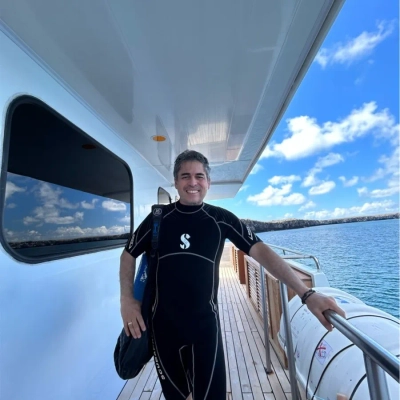
Nobody likes approving big spending when the payoff is unclear. Our Galapagos expedition ship project changed how I think about this. We released budget in stages, only if we hit occupancy and pre-sales milestones. Operations and finance could finally agree on risk because we could cut or expand resources based on actual numbers. Try these gates before a full launch. It forces real conversations about returns and gives teams concrete targets.
Reserve Revenue for Optionality
 Iman BahraniDirector, Searchical
Running a remote SEO team, I started setting aside a percentage of revenue for uncertain growth, what I call an optionality envelope. At Searchical, it forced us to be selective. Each growth idea had to prove its value before we'd fund it. We stayed focused without killing experimentation. Leaders balancing risk and discipline should try this.
Solve Capacity Limits Ahead of Leads
 Ginger WhitsonFounder & CEO, Cleaning Business Growth
I decide finance should hold the line when the spend is funding activity instead of removing the real constraint. In a cleaning business, more demand is not growth if you can't answer inquiries, staff the work, retain clients, or protect margins.
At Love My Maids, I grew to more than 350 recurring clients and about 25 employees, and one budgeting conversation changed me: I wanted to keep pushing lead generation, but the real bottleneck was capacity. Spending more before we had enough trained cleaners and follow-up systems would have created chaos, not profit.
So I started asking: "If this works, can we actually handle the success?" If the answer is no, the budget goes first to systems, hiring, training, sales process, reviews, or retention.
The best finance discipline is not saying no to opportunity. It is sequencing the spend so the business can absorb the growth it is paying for.
Prove Delivery Systems Before Expansion

In my role leading Functional Medicine Fast Track with thirty years of hands-on practice ownership and scaling work alongside hundreds of licensed clinicians, I face these exact requests when practitioners want to expand programs without risking their base income.
I hold the line unless the spend starts with deployable infrastructure that runs in the background and lets clients experience results before any deeper commitment. That low-friction structure generates the proof needed before moving anyone to premium tiers or larger outlays.
One conversation that reset my view involved a full-time clinician building a side practice. We focused spend only on a ready system with defined processes so they contributed five to ten hours weekly once initial clients validated the model, rather than layering tasks or gambling on untested growth.
This approach keeps discipline by requiring outcomes to compound through recurring delivery before any further investment, turning uncertain requests into measured steps that protect cash flow.
Equip Technicians for First-Visit Fixes
 Dawn MedinaChief Financial Officer, Cool Masters Services
As CFO at Cool Masters Services I oversee spending for an HVAC company where every dollar must support long-term system performance and customer trust in Metro Atlanta homes.
I hold the line on growth requests that lack a direct link to measurable efficiency gains or reduced repair frequency. For instance spending on unproven add-ons gets rejected when core maintenance like regular filter changes and professional servicing already extends equipment life without extra outlays.
One conversation about budgeting for technician training and preparation changed my view. We weighed uncertain short-term costs against the value of knowledgeable staff who arrive equipped and fix issues right the first time rather than ordering parts repeatedly. That led us to prioritize training tied to actual job outcomes over broader expansion ideas with fuzzy payoffs.
Reject Growth That Betrays Principles
 Nurmukhammad IsmoilovCEO, Akinda
We argued in the boardroom over a revenue stream that clashed with our halal principles. The growth numbers were tempting. We walked away anyway. When a deal depends on leverage or hides what's really happening, pass. We slept fine that night. I'll take that over uncertain returns any day.
Make Strategy Earn Investment
 Scott Brazdo MBAFounder & CEO, Upskale Marketing
I've spent 30+ years building brands, helping rebrand 300+ companies, and running a marketing agency for 16 years before selling it. My rule is: finance should hold the line on spending that buys activity before the strategy is clear.
Uncertain return is acceptable; unclear assumptions are not. I'll fund a disciplined test, but I won't fund "let's do everything" budgets with no defined customer, message, channel, or learning objective.
One conversation that changed me was when we were deciding whether to invest heavily into AI search and answer engine optimization before the market was fully mature. Instead of treating it as an all-or-nothing bet, we budgeted around learning: analyze how businesses appeared in AI answers, identify gaps, build the service model, and expand only as the opportunity became clearer.
That taught me that financial discipline should not mean saying no to the future. It means forcing the opportunity to earn more budget one layer of evidence at a time.
Require Measurable Course Corrections

I've sat on both sides of this -- as a software architect building enterprise systems for Fortune 500s at BSoft, and now as CEO of a SaaS wellness platform where every dollar of growth spend competes directly against measurable client outcomes.
The framework I use: uncertain return isn't automatically a reason to say no, but it is a reason to demand a proof mechanism before committing full budget. When clients come to us unsure whether a wellness program will move the needle, we build in performance guarantees and cancellation clauses -- the same discipline I apply internally when evaluating growth bets.
The budgeting conversation that changed me most was around customization versus scalability. Early on, we considered building one-size-fits-all programming to reduce costs. Holding the line there was the right call -- one of our clients was stuck at 25% engagement under a cookie-cutter vendor, and we moved them to 60% in year one, then 84% in year two, specifically because we invested in nuanced, data-driven program design instead of cheaper generic solutions.
The lesson: finance should hold the line when the growth ask lacks a feedback mechanism. If you can't measure it at defined intervals and course-correct, you're not managing risk -- you're just spending.
Tie New Hires to Output Targets

When someone pushes for spending with fuzzy returns, I ask what number they're actually chasing. After a tense debate about hiring more devs, we made a rule: every new headcount needs a revenue target or efficiency gain within 12 to 18 months. No target, no hire. Stops us from just adding people because we can.
Pursue Adjacent Products Within Runway
 Thomas DeFabrizioCFO, Vertage
Finance should hold the line when the downside is unclear, not simply because the upside is uncertain.
One budgeting conversation that changed how I think about this happened in 2020 at a travel technology company. Travel volume had collapsed, so the easy answer would have been to freeze investment and protect cash.
Instead, we had a different conversation: if we have the runway, what should we build now that we may not have had the capacity to build in a normal year?
We invested in adjacent products, including car rental and activities, knowing we could not put a precise return on them at the time. What made me comfortable was that we understood the cash commitment, we could stage the investment, and the products were close to a customer base and capability we already understood.
That experience changed my budgeting approach. I do not need certainty before funding growth, but I do need to know what the dollar is supposed to produce.