

Show Auditable Cause And Effect

In situations where short-term financial pressure makes long-term investment a harder sell, I focus on pairing a clear customer story with a small, disciplined set of metrics. The story explains the real business problem and what the investment changes in practical terms, so the decision is not abstract. Then I back it with two or three cohort-based, time-series metrics that tie the results to the specific initiative, not to hopeful assumptions. The single approach that consistently moves skeptical stakeholders is showing cause and effect in a way they can audit, and then translating that impact into unit economics they recognize. When people can see both the human outcome and the measured proof, the conversation shifts from risk to repeatability.
Outmatch Discounts With Verifiable Trust
 Dwight ZahringerFounder, SJD Taxi Airport Shuttle
I've spent 20+ years in web development/SEO and digital commerce in travel, and I now run SJD Taxi (airport transfers in Los Cabos) plus a cross-border agency. When cash gets tight, the temptation is to chase quick bookings with gimmicks, but in travel that usually turns into a trust problem later.
The move that held up under pressure was investing in "licensed + credible" positioning as an owned asset, not a campaign. We built content and site structure around what travelers actually worry about (licensed transportation, resort access, fleet maintenance, safety), and tied it directly to what we sell: private and shuttle airport transfers, group management, and special requests like grocery stops and welcome drinks.
The single argument that converted skeptics: "We can't out-discount the market, but we can out-verify it." If the website becomes the proof layer--clear standards, consistent education, and a reputation that matches the on-the-ground service--then every future ad, partnership, and referral converts better because the buyer's risk feels lower.
Tactically, I kept it from turning into a vague brand debate by forcing a yes/no test: will this investment make our digital assets more defensible (content, reputation, processes) and reduce customer uncertainty at the moment of booking? If it didn't, it was cut--even if it sounded 'profitable' this week.
Prevent Blockers With Early Governance
 Maria Chatzou DunfordCEO & Founder, Lifebit
I've had to make this case in genomics/HPC long before Lifebit--building Nextflow and research tooling at CRG taught me that "cheap now" becomes "impossible later" when data and pipelines scale. As CEO/co-founder of Lifebit, I've repeated the same argument with governments and pharma when short-term budgets push for quick hacks.
The single approach that consistently convinced skeptics was flipping the decision from feature ROI to governance risk: if you don't invest early in a federated Trusted Research Environment with multi-layered controls (de-identification, encryption, RBAC, airlock, segregation) and FAIR metadata, you're not "saving money," you're creating future blockers. Once data becomes a liability, every downstream use case (RWE, pharmacovigilance, clinical trial optimization) turns into a bespoke, slow, compliance-heavy negotiation.
One concrete example: when stakeholders wanted to centralize sensitive multi-omic data to "move faster," I pushed for federation and an open ecosystem instead. The argument that landed was: keeping data in-place while standardizing access and auditability is what unlocks collaboration at scale without re-litigating privacy and cross-border constraints every time.
I also made it operational, not philosophical: invest once in the platform layer (TRE + trusted data lakehouse + real-time analytics layer), and you stop paying the "integration tax" on every new dataset, tool, or partner. That's what turns long-term strategy into near-term delivery speed without compromising compliance.
Prove Premium Margins From Differentiation
 Aastha KapoorFounder, Sy'a teas
While building sy'a, there was pressure to prioritize short-term revenue over investing in a global tea sourcing network. Instead of presenting it as a luxury expense, the approach framed the investment in measurable terms: how access to rare teas would increase product differentiation, command premium pricing, and expand repeat customer revenue over time. The most convincing argument was showing projected margins on flagship blends versus current offerings. By modeling a 27% higher lifetime value for customers attracted to these exclusive teas, stakeholders could see that the long-term gain outweighed the immediate cost. This perspective turned skepticism into alignment, and the investment proceeded. Within months, unique offerings boosted average order value and reinforced sy'a's promise of "beyond indulgence," creating a tangible foundation for sustainable growth while still respecting short-term financial realities.
Build Momentum With Consistent Proof
 Petar NeftelimovFounder, Author, Blogger & Business Development Manager, Neftelimov.com
I successfully advocated for the long-term investment by proposing a focused positive storytelling campaign that shifted the discussion away from short-term noise and toward cultural and pipeline gains. We published over 250 positive stories and ran more than 70 interviews to build social proof and normalize achievement. The single argument that convinced skeptical stakeholders was that a steady cadence of concrete, verifiable examples creates compounding effects — stories build belief, and practical playbooks turn that belief into momentum. Framing the spend as an investment in sustained attention and replicable practices won the buy-in we needed to move forward.
Treat Salaries As Managed Investments
 Jennifer DohertyCEO, ProvenHR
I successfully advocated for a long-term compensation framework by reframing payroll decisions as deliberate investments rather than ad hoc costs. I presented a clear policy that tied pay bands to role value, internal equity, and predictable forecasting so leaders could see the downstream effects of ad hoc raises. The single argument that shifted skeptics was that every salary is an investment whose return can be managed; discipline now reduces the unpredictable costs of turnover and misaligned pay later. Once stakeholders saw how the approach improved forecasting and made manager conversations clearer, they supported the strategic investment and we moved to a systematic process.
Change The System To Gain Leverage
 Alan AraujoAI Strategy & Keynote Speaker | Founder, Lux MedSpa Brickell, Alan Araujo
When advocating for a long-term investment under short-term financial pressure, I focused on reframing the decision from cost to structural positioning.
Instead of defending the investment as an expense, I presented it as a shift in how the business would operate moving forward, specifically, how it would reduce dependency, increase consistency, and create leverage over time.
The argument that ultimately aligned stakeholders was simple: short-term savings often preserve the current system, while the right long-term investment changes the system entirely.
I supported that position by clearly outlining what would remain fragile without the investment versus what would become scalable with it.
By anchoring the conversation in structure, not just financial return, it became easier for stakeholders to see that delaying the decision was not neutral; it was a choice to maintain limitations.
That clarity shifted the conversation from risk avoidance to strategic progression, which ultimately secured alignment.
Fund Security To Avoid Irreversible Damage
 Nikhil PaiFounder, Chronicle Technologies
I advocated for investing in federal-grade data security compliance when our revenue as a bootstrapped company barely covered operating costs. The argument that ultimately won came down to a simple question I asked my team. If a single data breach hits one of our law firms and word spreads through this tiny market, do we survive it? Everyone in the room knew the answer was no.
The short-term pressure was real. Every dollar we had should have gone toward sales and growth. We had no investors backing us, so compliance spending came directly from the money we needed to keep the lights on. My team pushed back because they wanted to ship faster and close more firms before worrying about security certifications.
I remember pulling up a list of every disability law firm in the country and showing how small the total addressable market actually was. If even five firms heard about a data issue, the reputational damage would have closed doors we could never reopen. In a niche this small, trust doesn't recover. You get one shot.
From my experience bootstrapping my company, the argument that convinces skeptical stakeholders on long-term investments isn't about the upside of doing it. It's about the irreversibility of not doing it. When the downside of skipping the investment is permanent (and I mean genuinely permanent, not just painful), the short-term cost stops looking expensive. It starts looking like the cheapest insurance you'll ever buy. We now serve over 100 firms with 97% retention. That number didn't happen by accident. Early security investment is a big reason those firms trusted us from day one.
Use Fast Lead Indicators For Revenue
 Trav LubinskyFounder, Trav Brand
I've been on both sides of this--building Flex Watches to $1M in 6 months, then later advising/growing brands through Trav Brand--so I'm used to stakeholders pushing "hit this month's number" while I'm fighting for the move that wins the year.
The single argument that converts skeptics: make the long-term spend the shortest path to revenue, not a "brand tax." I tie the investment to one measurable leading indicator that sales can feel fast (conversion rate, AOV, email capture rate, repeat purchase), then I show how it becomes a compounding asset (creative library, landing pages, positioning, partnerships) instead of a one-off campaign.
Example: with Flex Watches, the "long-term" bet was celebrity/brand partnerships and story-led drops. The way I sold it internally wasn't "awareness"--it was "distribution + sales leverage": show we can move units, then licensing/partners take our calls and terms improve because there's proof of demand.
My approach in meetings is to pre-negotiate the pressure: I'll propose a two-track plan--keep performance marketing on to protect cash flow, but ring-fence a specific brand/build initiative with a clear definition of "working" (creative/message tests, retention signals, partnership pipeline). Once everyone agrees on the scoreboard, the debate stops being emotional and turns into execution.
Win Earlier With One Stop Packages
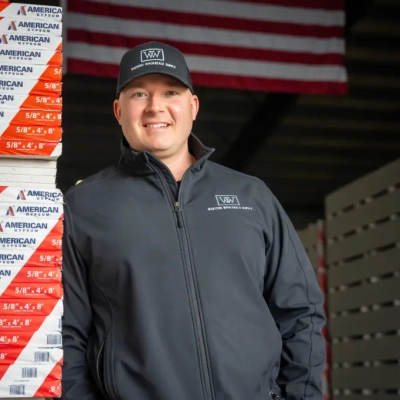 Jake BeanPresident & Co-Owner, Western Wholesale Supply
As a third-generation owner and former Navy helicopter pilot, I've managed complex operations where disciplined execution and long-term planning are the only ways to survive thin margins. My experience leading Western Wholesale Supply through decades of market shifts has taught me that the biggest risks often come from playing it too safe.
When advocating for our expansion into steel framing and insulation, I faced skepticism regarding the high upfront inventory costs for USG and CertainTeed products during a period of financial pressure. Stakeholders were hesitant to move beyond our core drywall business while material costs were fluctuating.
The winning approach was pitching the "complete shell package" concept, demonstrating that providing a one-stop solution for general contractors would secure our business earlier in the project lifecycle. I used our real-world bidding data to show that being a single point of contact for the entire interior shell would eliminate their scheduling conflicts and make our bids more attractive than competitors.
By framing the investment as a way to reduce the administrative burden on our customers, I shifted the internal focus from the cost of materials to the value of the partnership. This strategic move successfully transitioned us from a simple vendor to an indispensable partner in the Eastern Idaho construction market.
Safeguard Options With Structured Sale Process
 Einar VollsetManaging Partner, Discretion Capital
I'm Einar Vollset, Founder/Managing Partner at Discretion Capital. I run sell-side M&A for B2B SaaS ($2-25M ARR), and the entire job is advocating for "do the right long-term move" while founders feel near-term cash/runway pressure.
The single argument that consistently works is: "You don't get to choose your outcome if you wait--runway is leverage." I'll literally map decisions to leverage (12-18 months of runway) vs desperation (3-6 months), because desperation shows up as worse terms, retrades, and buyers dragging you in exclusivity.
A concrete example: when a founder wanted to entertain an inbound offer quickly to "reduce stress," I pushed for a full process instead--pre-diligence, tight story, then a structured LOI deadline across a broad buyer list. The skeptics got convinced when they saw that urgency and competition aren't vibes; they're mechanics, and they protect you from being negotiated one-on-one by professional buyers.
The approach is not "believe my vision," it's "choose the process that preserves options." Cut to sustainability if needed, fix what diligence will break, then run a paced market with clear deadlines--because you can't negotiate well while your runway is burning and exclusivity has you handcuffed.
Preserve Credibility To Spur Repeat Behavior
 Nabilah ShamseddineFounder & CEO, Barkology Wellness
I've had to make this case a lot as a multi-unit Orangetheory owner/area developer and now leading franchise ops at BARKology Wellness, where "luxury + science" costs more up front than a basic groom-and-go model. When cash gets tight, the temptation is to strip the experience down to bare minimums and call it "lean."
What worked for me was reframing the spend as a risk-control investment, not a "nice-to-have." At BARKology, things like a stress-free flow (private outdoor area, calming environment) and science-backed add-ons (PEMF and red light therapy) aren't just upsells--they reduce rework, complaints, and churn because the dog's experience is calmer and the owner's trust compounds.
The single argument that moved skeptical stakeholders was: "We're not buying features--we're buying predictable repeat behavior." I'd walk them through how memberships (Fresh & Fluffy, Mini/Full Groom, Wellness plans) only work if the experience is consistently premium; otherwise you're funding discounts with no retention engine.
Tactically, I brought one decision to the table: protect the non-negotiables that create trust (product quality, environment, staff training/standards), and cut or delay anything that doesn't touch client experience. That made the investment feel disciplined, not emotional, and gave everyone a clear line between "strategic" and "optional."
Buy Execution Certainty With Operational Discipline
 Andrew LambFounder & Owner, 4 Leaf Performance
I spent 25+ years in senior global leadership roles (including 20+ at HP) and now I do operational due diligence and post-close integration for owners/investors, so I've had to defend long-horizon bets when everyone's staring at the next quarter. The only way I've seen it land is when you tie the investment to execution certainty, not "future upside."
One case: during an acquisition transition, I pushed for funding the unsexy work--documenting SOPs, establishing KPIs, and doing real knowledge transfer out of the founder's head--while finance wanted immediate cost cuts. My argument was simple: without operational clarity, you don't have a scalable business, you have a personality-dependent one, and every "savings" turns into rework, delays, and leadership churn.
What convinced skeptical stakeholders was a 90-day, owner-based plan: three priorities, one accountable leader per priority, and a weekly review rhythm that made progress visible. I wasn't asking them to "believe," I was showing exactly how the spend converts into repeatable execution during the integration window.
I also pre-empted the team's anxiety with a structured communication plan (because it takes repeated touchpoints for people to actually absorb change), which protected productivity while the systems work got built. The investment became the cheapest way to keep the org moving through transition instead of stalling in uncertainty.
Quantify Status Quo Costs To Persuade
 Faiz AhmedFounder, GpuPerHour
The single argument that unlocked a strategic investment for me at GpuPerHour was showing what the cost of doing nothing would be, in specific numbers, over the same window the skeptics wanted to measure the return on the new spend. I had been pitching the investment in terms of upside. That kept losing. The moment I reframed it as the avoidable downside from keeping the current system, the same stakeholders who had been blocking the conversation switched sides.
The specific example was a rewrite of our internal pricing pipeline. The team wanted to patch it. I wanted to rebuild it because the old pipeline was missing data from two providers and producing stale numbers during peak traffic. Everyone agreed the rebuild would be better, but nobody wanted to pay for it when there was no obvious revenue uplift.
What changed the conversation was a concrete projection: if we kept the old pipeline through the next two quarters, we would ship roughly 180 support tickets related to the data staleness, consume about 60 hours of engineering time responding to them, and lose at least three high intent signups per month who bounced when they saw a stale price. I put those numbers next to the cost of the rebuild.
The approach that works on skeptical stakeholders is not louder advocacy. It is framing the investment as insurance against a cost they will pay anyway. Nobody wants to gamble on upside they cannot visualize, but almost everyone will fund avoiding a visible, measurable cost.
Faiz Ahmed
Founder, GpuPerHour
Sell Readiness Not Cheapest Availability
 Eric OsburnOwner, Osburn Services
I've owned Osburn Services for 30+ years and we've installed thousands of standby generators across Michigan, so I've had to make "spend now" calls (inventory, techs, training, 24-hour service) while storms and outages were already hammering cash flow.
The move that got the most pushback was keeping generators in stock and building true 24/7 emergency response capacity instead of running lean and ordering "as needed." The short-term pressure is obvious: money tied up on the floor, more labor coverage, more trucks rolling.
The single argument that flipped skeptical stakeholders was: downtime is the most expensive thing we sell. If we can't install or service immediately when the grid is failing, we don't just lose that job--we lose the customer for life (and their neighbor, and the facilities manager's whole vendor list). I framed it as protecting our reputation as a reliability company, not a "cheapest bid" company.
I backed it up with one real-world case type: critical sites (like hospitals and commercial operations) don't care about our internal budgeting--they care that the transfer switch works and someone answers at 2 a.m. Once stakeholders saw that "readiness" is the product, the long-term investment stopped looking optional and started looking like the only defensible strategy in Michigan weather.
Reduce Callbacks With Full Code Work
 Chris LebieckiOwner, Peak Heating & Cooling
I run Peak Heating & Cooling in Glenview and we've been doing heating/cooling work around Chicagoland for 20+ years, so I've had to argue for "do it right" decisions when the cheaper fix would've helped cash flow this month. HVAC is unforgiving: the weather doesn't care about your budget.
The long-term investment I've had to sell repeatedly is doing full-code, properly sized installs (load calculations), pulling permits/inspections, and putting real time into seasonal maintenance systems (spring AC, fall heat) instead of just chasing same-day repair volume. Under short-term pressure, it's tempting to skip paperwork, rush change-outs, or only do "band-aid" repairs.
The single argument that converts skeptics is: "We're buying fewer callbacks and fewer emergency escalations." I'll point to patterns we see--clogged filters, blower failures, ignitors, cracked heat exchangers--where a rushed repair or skipped maintenance turns into a 2am no-heat call in freezing weather that wrecks the schedule and margin.
One concrete case: when a boiler is 15+ years old and repair cost is heading toward half of replacement, I don't debate feelings--I lay out two paths with clear scopes (repair vs replace), include permits/inspection, and tie it to reliability during extremes plus the option of 0% financing for qualified customers. That reframes the decision from "spend vs don't spend" into "planned project now vs uncontrolled emergency later."
Compare Rebuild Expense Against Preservation Now
 Abhinav PuriFounder at HYPD Sports, HYPD Sports
There was a moment at HYPD where we were under real financial pressure and the temptation to cut our community building investment was genuinely strong. It looked like a discretionary spend on paper and every short term signal was pointing toward pulling back. I knew if we cut it we would save money for one quarter and lose ground for the next three years. The argument that finally landed with skeptical stakeholders was not emotional and it was not visionary. It was a simple cost comparison. I showed them exactly what it would cost us to rebuild that community from scratch versus what it cost to protect and grow it now. The numbers made the decision obvious. We held the investment and within two quarters community driven revenue grew by 38.4% which validated everything we had argued for. The lesson was that long term thinking only wins short term arguments when you translate it into short term numbers. Speak the language of the room you are in and the right decision becomes much easier to defend.
Deliver Traction First Then Ask
 Runbo LiCEO, Magic Hour AI
I'm Runbo Li, Co-founder & CEO at Magic Hour.
The single most persuasive argument for long-term investment is a working prototype that already has traction. Not a pitch deck. Not a forecast model. A thing people are already using.
When David and I were building Magic Hour, we faced a version of this constantly. We were two people, bootstrapping before YC, and every dollar we spent on infrastructure or model experimentation was a dollar we couldn't spend on growth or survival. The short-term pressure was real. We had moments where the rational move looked like cutting compute costs, simplifying the product, and just optimizing what already worked.
But I'd learned something at Meta working on zero-to-one products at NPE. The projects that got killed were almost always the ones that only had a narrative. The ones that survived had usage data that told a story no spreadsheet projection could. So instead of arguing for why we should invest in new templates and model integrations, I just built them. Fast. I'd ship a new AI video template, post the output on social media, and let the numbers do the talking. One NBA edit hit over 200 million people. Mark Cuban became a paying customer. The Dallas Mavericks reached out on their own.
That changed every conversation with potential investors and partners. I wasn't saying "trust me, this will work." I was saying "here's what happened last Tuesday."
The approach that convinces skeptical stakeholders is what I call "proof before permission." You don't ask for buy-in on a long-term bet. You run a small, fast, cheap version of that bet and come back with results. Skeptics aren't swayed by logic. They're swayed by evidence they can't argue with. A $500 experiment that shows 10x engagement beats a $50,000 strategy deck every single time.
The mistake most people make is treating advocacy as a persuasion problem. It's not. It's an evidence problem. If you need to convince someone that a long-term investment is worth the short-term pain, stop talking and start showing. Build the smallest possible version of the future you're proposing, put it in front of real users, and let the data make your case.
Nobody argues with a graph that goes up and to the right.
Map Decline Sequence To Sustain Pace
 Pearly ChanSEO Manager, One Search Pro
Skeptical stakeholders were not convinced by ambition. They were convinced by sequence. The discussion moved away from asking whether long term strategy mattered and toward understanding what happens first when it is underfunded. Usually the first loss is not revenue. It is visibility, then confidence, then conversion efficiency. By the time finance sees the full impact, correction costs have already multiplied.
I mapped that sequence clearly and kept it grounded in business consequences. Once stakeholders saw that short term cuts would quietly reduce future efficiency, the investment no longer looked like a stretch. It looked like the more disciplined choice because it preserved momentum before deterioration became measurable and expensive.
Hit Critical Windows To Unlock Efficiency
 Mark BietzCMO, Halloween Costumes
We advocated successfully by focusing on timing instead of technology. In our business demand is concentrated and only a few moments each year create high value from better systems and decisions. We explained that waiting for financial pressure to ease would make us miss the right window. That window is when improvements can strongly increase efficiency and profitability.
We translated the strategy into finance language. We modeled how faster speed and better precision improve working capital discipline and campaign efficiency. We also showed fewer costly corrections during peak periods which improves execution. Stakeholders saw it as operational readiness and a way to improve resilience in high stakes seasons making long term approval easier.
Prioritize Unit Economics Over Immediate Returns
 Christopher CoussonsDirector, Visionary Marketing
Chris here -- I run Visionary Marketing, a specialist SEO and Google Ads agency. I regularly advocate for long-term marketing investments with clients who are under pressure to show immediate returns, so this is a conversation I have frequently.
The approach that convinced the most sceptical stakeholder: I stopped arguing about marketing theory and started speaking in their language -- revenue projections with conservative assumptions. I had a client whose leadership team wanted to cut their SEO budget because it wasn't producing results after three months. Paid ads were generating immediate leads, so the instinct was to shift everything to short-term performance channels.
Instead of defending SEO philosophically, I built a 12-month financial model comparing two scenarios: all-in on paid ads versus a blended approach with continued SEO investment. The model showed that while paid ads generated leads immediately, the cost-per-lead increased over time as competition for ad placements intensified. SEO, meanwhile, had a higher upfront cost but a declining cost-per-lead over time as content matured and rankings compounded.
The single argument that ultimately convinced them: "In month 12, your paid ads will cost the same as they do today per lead. Your SEO content will generate leads at zero marginal cost because the content already exists and ranks. Which scenario gives you better unit economics at month 18?" That framing -- unit economics over time rather than immediate ROI -- shifted the conversation from "what's working now" to "what builds a sustainable acquisition engine."
They maintained the blended budget. By month 9, organic traffic had overtaken paid as their largest lead source at roughly a third of the per-lead cost.
Avoid Delay To Keep Compounding
 Joseph Ryan SmolarzFounder, The Medicine & Money Show
One of my fellow physicians at STOR Partners was under pressure to cut back on long-term investing because cash flow felt tight. Between student loans, private school tuition, and a recent home purchase, he felt like pausing retirement contributions for a few years would give him breathing room.
The argument that changed his mind was simple.
Short-term pressure feels urgent, but long-term delay is expensive.
Physicians already start investing later than most professionals because of training, debt, and delayed earnings. Every year you wait can cost far more than the temporary relief you gain. Over the long run, the market has historically returned close to 10 percent annually. Missing even a few years of compounding can mean losing hundreds of thousands of dollars later.
Instead of stopping investments completely, we helped him restructure. He reduced discretionary spending, delayed upgrading cars, and automated a smaller monthly investment amount that still kept him moving forward.
Most people think financial success comes from making one big decision.
In reality, it usually comes from continuing to make small good decisions when life gets uncomfortable.
That is something I talk about in Pillar 3 of Freedom For Doctors: A Physician's Guide to Financial and Personal Liberation. Strategic people keep moving, even if they have to move more slowly for a while. Reactive people stop altogether.
Model IRR To Translate Strategy Into Cash
 Kolton ShrevePrincipal (Strategic Finance)
I frame decisions around long-term value creation by building a project finance-style model that layers initiative-level cash flow impacts into a pro forma view.
For each project, I model revenue uplift, OpEx savings, EBITDA impact, Capex, and the resulting free cash flow to calculate an IRR so that people can clearly see how short-term pressure translates into outsized future cash flow and enterprise value growth over time.
Choose Specialization To Compound Reputation
 Anthony HamiltonCo-Founder & CEO, THE Water Heater Company
I run a water heater specialty company in Southern California, and I've had to make the case for long-term investment repeatedly -- both internally with my co-founder Gonzo and externally with customers who are staring at an unexpected expense.
The argument that worked for us wasn't about vision. It was about identity. When we committed to specialization over general plumbing -- building our entire brand around water heaters only -- the short-term pressure was real. Skeptics asked why we'd narrow our scope. The answer was simple: depth beats breadth when trust is the product.
The proof showed up in the work itself. Customers started noticing that our technicians weren't generalists guessing their way through a job -- they were specialists who could diagnose, explain, and execute without hand-holding. That reputation compounded. Awards, repeat customers, referrals. The long-term bet on specialization paid off in ways a broader approach never would have.
The single argument that convinced skeptics -- including myself in early moments of doubt -- was this: a license is just a starting line. Anyone can get licensed. Not everyone will build a team that goes above and beyond on a 100-degree day in a hot garage, or takes off their shoe covers every single time they walk back inside. That standard of craft is a long-term investment in itself, and the customers who experience it don't go anywhere else.
Allocate To Shorten Patient Access Pathways
I've had to make this case on both sides of the table: building Golden State Urology since 2007 while also serving as CMO at Promaxo, where product decisions have to survive real clinical and budget scrutiny. The common thread is that medicine punishes "cheap now" decisions later.
At Golden State Urology, the cleanest example was committing to clinical trials infrastructure even when it feels like overhead. The pitch wasn't "innovation is cool," it was "the process is designed to remove friction for patients"--trial-related appointments and pre-qualification lab tests are fully paid for, no insurance required, and patients get ongoing access to staff throughout the trial.
The single argument that moved skeptical stakeholders was reframing the investment as a patient-access engine with immediate operational benefits, not a distant R&D bet. If you can shorten the time from "I need help" to "I'm getting evaluated and treated," you're not just funding research--you're protecting outcomes, reputation, and continuity of care when margins are tight.
Practically: I brought one-page, patient-journey maps into the decision meeting (calls - assessment - follow-ups over 12-24 months), and forced the discussion to be about bottlenecks and patient drop-off rather than dollars. Once stakeholders argue about patient experience steps, the long-term investment becomes the obvious fix instead of a discretionary spend.