
Q&A
25 Unexpected Skills Outside Traditional Finance That Future-Proof Your Career

The next career advantage may come from skills far outside traditional finance. Experts in the field share practical insights on technology, storytelling, cybersecurity, forecasting, and more. These lessons can help professionals solve problems, earn trust, and stay valuable as work changes.
§ How this was made
The perspectives in this article were written by the named contributors and submitted through Connectively. Connectively's automated system selected them and used AI to write the headline, introduction, section headings, summary sections, and illustration, and to make minor edits for clarity. Articles are assembled and published automatically. Report errors to corrections@connectively.us. How we make our content

Illustration generated with AI
Query Native Data With SQL
 Loretta KildayDebtCC Spokesperson, Debt Consolidation Care
In my thirty-plus years of litigating high-stakes bankruptcy and family law cases across Chicago, I realized early on that traditional legal training possessed a massive blind spot. Law schools teach you how to argue the U.S. Bankruptcy Code, and finance programs teach you to read a balance sheet, but neither teaches you how to interrogate raw digital infrastructure. The most unexpected skill I developed that future-proofed my career was Relational Database Architecture and the mastery of Structured Query Language (SQL). I noticed a terrifying trend: hostile spouses were no longer hiding assets by shredding documents. They were burying them underneath millions of rows of digitized transactional noise, fully expecting a traditional lawyer would simply drown in the sheer volume of the discovery production.
This capability instantly distinguished me from my peers because it eliminated my reliance on expensive forensic accountants. When a deceptive debtor handed over a heavily sanitized five-hundred-page PDF of their financial life, colleagues would spend weeks armed with highlighters trying to manually trace missing capital. I refused to play that archaic game. Instead, I filed motions compelling the production of raw, native database files, uploading their entire financial existence into my securely constructed relational database. By writing precise SQL code, I could instantly isolate every preferential transfer under 11 U.S.C. SS 547 or fraudulent conveyance under 11 U.S.C. SS 548. A financial ghost hunt that took an opposing firm three billable months to fail at, I could execute with absolute surgical precision in minutes before my first cup of coffee.
This technical skill turned my practice into a weaponized financial intelligence firm. In the courtroom, it is terrifyingly effective to cross-examine a hostile witness relying on the unassailable code of their own financial architecture rather than a summarized accounting report. While the legal industry panics about being replaced by artificial intelligence, I integrated algorithmic logic into my strategy decades ago. Querying relational databases allowed me to stop fighting the symptoms of financial deception and directly attack the digital disease. You cannot effectively practice complex financial law if you are scientifically incapable of reading the digital blueprint where the money is hidden. Whoever controls the native data dictates the entire legal narrative and secures the client's survival.
Tell Stories That Win Backers
 Niclas SchlopsnaManaging Partner, spectup
One unexpected skill that has helped future-proof my career is storytelling.
My background includes banking, consulting, and venture building, so I was initially accustomed to thinking in terms of financial performance, business models, and investment metrics. Over time, I realized that understanding the numbers is only half the job. Being able to explain what those numbers mean, why they matter, and what decisions they should influence is equally important.
At spectup, I work with founders who often have technically strong businesses but struggle to communicate their investment proposition clearly. Helping them turn complex business models, financial assumptions, and growth opportunities into compelling narratives has become an important part of my work.
This capability distinguishes me because I can approach a business from both an analytical and communication perspective. I understand the financial logic behind an opportunity, but I also know how to make that opportunity understandable and relevant to different audiences.
My advice is not to focus exclusively on becoming better at your technical discipline. Develop the ability to communicate, persuade, and understand people. Financial expertise may help you identify opportunities, but communication helps you bring others along with you.
In an increasingly automated world, the ability to connect analytical thinking with human understanding becomes even more valuable.
Adopt Technology for Better Advice
 Eric CroakCFP, President, Croak Capital
Hi, I'm Eric Croak, a Certified Financial Plannertm and President of Croak Capital. We're a fiduciary wealth management firm based in Ohio, and we manage over $300 million. My biggest edge has been getting comfortable with technology. Anyone who's worked as an advisor knows how a week can vanish into busywork. You rebuild the same reports, copy numbers from one system into another, and type out the same follow-up email for the hundredth time. I took the time to understand how the tools behind that work actually run, and I'm happy to try new ones before most people do. The payoff is hours back in my week, and I spend them with clients. That matters more than it might sound. People expect to know what's going on with their money, and they want to hear about it on a regular schedule. Good systems let me do that without cutting corners. It also shifted how I see my own profession. Plenty of advisors look at technology, and AI in particular, and see a threat. I see something that takes the repetitive chores off my plate. What's left is the part no software can do: sitting across the table from a family while they work through a hard decision. So if I were starting out now, I'd put almost as much effort into learning how these tools work as I put into studying for the CFP(r) exam.
Build Software for Real-Time Insight
 Ronald OsborneFounder, Ronald Osborne Business Coach
The skill outside finance that future proofed my career was building software, which I picked up making websites and mobile apps while I was serving in the Australian Army. I later did an MBA in finance, but the coding mattered more. When I built my NBN telecom contracting company to about 30 staff, I could not find a tool that tracked the work the way I wanted to pay for it, so we built our own. Every job was captured in the field, reviewed by an office admin, and fed straight into a pay model of a legal minimum base plus uncapped performance pay. That gave me clean, real time numbers on output and labour cost per job, and it is the reason the business could grow to about $2.2 million in peak revenue without the margin disappearing into rework. It also set me apart, because senior project people and government managers started asking me to advise them on difficult areas after they saw how we measured the work. Most finance people read reports someone else built. Being able to build the system that produces the numbers gave me a level of control and trust over the data that a spreadsheet never would have.
Map Dependencies to Cut Delays
 Nick KuangCo-founder, Home Sweet Home Offers
Program management. Before real estate I ran programs in Silicon Valley, and the habit of tracking dependencies and dates has done more for our numbers than any spreadsheet trick.
In flipping, money mostly leaks through timing. A drywall crew shows up before the electrical inspection passes, they leave, and you're paying to hold a house nobody can work in. So I started running each rehab like a program: one schedule, every trade's dependencies mapped out, and a weekly check on what's blocking the next step. Our rehabs got roughly two weeks shorter, and that matters more to profit than haggling over material prices.
What set us apart from other local investors is that I look at a budget and a schedule as the same thing. Most people treat them separately. Finance people who learn to manage the work, not just report on it, end up in the room where decisions get made.
My advice is to pick one skill that shows you how the money actually gets spent day to day, and learn it well.
Nick Kuang, Co-founder, Home Sweet Home Offers
Write Reports Founders Read
 Ankit SarawagiCurator, CFO Matrix
My report is the first they actually read. Here's an example of what I include in my numbers: this sentence was the beginning of my report so I could read it aloud to my co-founder.
I form this habit by writing short explanations that simulate me being the founder. Many people in the finance industry will go direct to the table, and if the founder can't do anything about the information provided they won't read any further.
A lot of this is public. I have a LinkedIn newsletter and answer questions from peers. These are both seen by people with no background in finance. If anything is unclear I'll be told what question I haven't answered. I receive much faster feedback than I ever did in a firm.
It takes longer to write clear sentences. I also look silly but I make sure the intent is conveyed. I'm not sure if this is why I've remained safe in my career or if I just enjoy doing it.
Demand Plain-Language Assumptions
 Sahil AgrawalFounder, Head of Marketing, Qubit Capital
One Tuesday in April, a fund partner skipped the product entirely and asked a founder we had lined up with him for the burn rate and the assumption behind month 9. I wrote that question down and started asking it of every financial model that reached me. I should say I am not a finance person. My work sits next to finance, reading the models founders send us before investors see them. The skill that helped was asking for one assumption in plain words and refusing to open the spreadsheet until I got it. You learn more from a founder struggling to say why growth doubles in month 9 than from the formulas.
Colleagues with real finance training read the models faster than I do. Where I seem to differ is that I ask the dumb question first. Left to myself, I trust any model with clean formatting.
Use Forecasts to Lift Profit
 Marc PamatianFinance/Bookkeeping Expert | Founder, Chief Bookkeeping Officer
Predictive analytics has helped me look beyond traditional bookkeeping and use data to guide business decisions. By combining historical results with current information, I can identify opportunities and make plans based on evidence rather than intuition alone. In my own business, applying sophisticated forecasting helped raise profitability by 25 percent over two financial years. It has distinguished my approach by connecting financial information to practical decisions about growth and risk.
Optimize Answer Engines for Reach
 Brandie YoungCo-Founder, RankWriters
Having led go-to-market strategies across fintech and mortgage lending, the most critical skill that future-proofed my career was mastering AI search optimization (AEO and GEO).
While many peers focused strictly on paid ad spend, I learned to translate complex financial concepts into structured content ecosystems that modern search and answer engines recognize.
Applying this approach at RankWriters for a rebranded B2B2C financial app drove a 400%+ increase in organic traffic in one year and grew ranking keywords from 117 to 557 without paid spend.
Prioritizing organic search ecosystems over temporary ad buys creates compounding pipeline growth and keeps your brand visible no matter how search algorithms evolve.
Use Dance to Spark Creativity
 Eric PemperFounder & Managing Member, CuraDebt
My degree is in computer engineering, not in finance, and I had a minor in dance as well as political science from UCSD. The one unexpected skill is dance, because dance is something that one does when one's flowing, it's creative, and it doesn't have a set repetitive manner of doing things. And that's really how things are today using AI.
Prevent Cyber Risks at Design
 Arpit JainOwner, SEO Sets
The least expected skill that I have acquired during my career is the knowledge of business cybersecurity. I have a degree in Computer Science from Indiana University Indianapolis and more than 12 years of experience in enterprise automation, cybersecurity, and digital transformation.
I've learned that security isn't just an IT concern. Data security, access controls, and system reliability can directly impact business operations. A technical issue can quickly turn into a business problem if critical information or systems are compromised.
As the Owner and CEO of SeoSets, I apply this mindset to the software I create and business decisions that I make. SeoSets offers SEO reporting, project management and website tools. While I pay attention to whether or not the tool works, I am also concerned about how the information will be processed and risks of using it.
I think being aware of both engineering and business needs has enabled me to be more discerning in my decision-making process. I would not like to deal with security after there is an issue. Rather, I would like to assess the risk involved when designing a product or investing in any technology.
My suggestion is to broaden your knowledge base outside your core specialty. It is equally important to know how systems break as how to build them.
Write Precise Plugin Prompts
 Kolton ShreveFounder, Glacier Lake Partners
I didn't expect writing instructions to become such a useful part of my day-to-day finance work early on in my career. With advent of using AI plugins in Excel, I now focus on providing instructions to AI Excel plugins, such as ChatGPT and Claude, about what I want to calculate, which assumptions to use, and how to lay out the results so I can easily check and validate them. I spend less time entering data and fixing formulas, which gives me more time to work through crafting a narrative based on the AI-generated financial analysis.
For example, when analyzing SKU-level profitability, I give the plugin instructions for organizing the raw data, calculating margins for each SKU, and laying out the results so they're easy to read and audit. I set thresholds to flag SKUs, such < 10% profit margin or fewer than 1,000 annual orders. I also explain how to allocate indirect costs, flag missing data, and link calculations back to the source data. I still check the work, but I spend much less time manually entering data and writing formulas.
Using AI in my finance work gives me more time to understand what's driving profitability and recommend changes, such as cutting low-volume, low-margin SKUs so the business can focus its resources on the products driving the business' revenue and profitability.
Understand Jurors to Win Cases
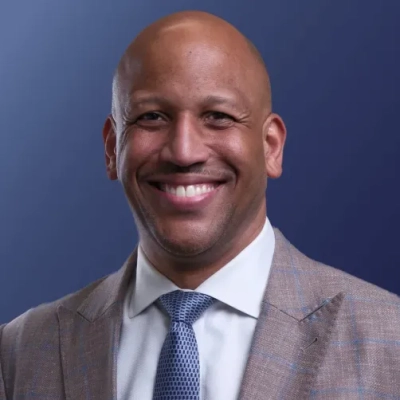 Justin ReeseOwner, J Reese Law Firm
The unexpected skill that's genuinely future-proofed my career is reading people -- specifically, the psychological dynamics of a room. My psychology degree from Morehouse wasn't a detour; it became my sharpest courtroom weapon. Understanding how jurors process fear, blame, and sympathy has consistently separated my advocacy from attorneys who only speak in legal theory.
That skill showed up directly in the Chinese Drywall MDL cases. Technically complex litigation lives or dies on whether you can translate invisible harm -- contaminated air, corroding copper wiring -- into something a jury feels viscerally. Psychology taught me how to do that. Most attorneys in that room were brilliant lawyers. Fewer understood persuasion architecture.
It also made me a better mediator. As a certified mediator handling complex civil cases, I'm constantly managing ego, grief, and entrenched positions simultaneously. Knowing why a corporate adjuster is digging in -- versus what they're saying -- lets me find resolution faster than pure legal pressure ever could.
If you're in any high-stakes profession, invest in understanding human behavior formally, not just intuitively. Read behavioral economics. Study negotiation psychology. The people who outlast their peers aren't always the most technically skilled -- they're the ones who understand what moves people to act.
Scout Rapids to Assess Markets
 Phil Town3x New York Times Best-Selling Author, Hedge Fund Manager, and Founder, Rule #1 Investing
Reading a rapid. That is the honest answer, and it has nothing to do with finance.
Before I ever looked at a balance sheet, I spent years guiding boats through the Grand Canyon. When you are about to run a big drop like Crystal, you can't stand at the top and wish it were smaller. You scout it. You look at what the water is actually doing, not what you hoped it would do. Then you pick a line and commit. The river does not care about your opinion.
I think that habit carried straight into investing. Markets get loud, and everybody has a story about what is about to happen. The skill is to look past the noise at what is actually in front of you. What does this business earn? What is it worth? What is the price today? Those are the same kind of questions a guide asks at the top of a rapid.
The river also taught me to stay calm when things go sideways. On Crystal, the water doesn't give you a second try, and panic gets you nowhere. You stay steady and do the next right thing. Investors need that more than any formula, because the moment the market drops is exactly when fear tells you to do the wrong thing.
The second skill is explaining hard things in plain English. I've never been a finance professional by training, so I had to learn this stuff in a way I could understand myself. That is why we talk about a lemonade stand to explain moats, and why I ask people whether they could explain a business to a ten-year-old. If I can't say it simply, I probably don't understand it yet.
I can't tell you how any of this compares with anyone else's path. I can tell you it has served me well. Learn to see clearly, stay calm, and say it simply. None of that shows up on a finance degree, and all of it matters.
Deliver Hospitality That Earns Loyalty
 Dean RotchinCEO at BLACKJET, BlackJet
My background in hospitality is what's really set me apart in private aviation. When I started BlackJet 25 years ago, I knew luxury travel was never just about getting a nice plane. It's about knowing what someone needs before they ask for it. Other people in the industry were all about operations and fleet management. I looked at what high-end hotels and membership clubs were doing instead. That's where I learned how to build emotional loyalty instead of just transacting with clients. In private aviation, you can have the best planes and the best safety records in the world, but if you treat clients like they're ticket numbers, someone else can replace you. Our jet card program is built on hospitality principles: personalized service, consistency, and actually caring about people. That's how we made it through multiple downturns, our retention rates stayed high. The lesson is that technical expertise gets you in the door, but understanding the human experience is what keeps you in business.
Craft Arguments That Prompt Action

The skill is persuasive writing, specifically reading how markets pitch an offer. Early on, I treated numbers as the whole job. Then I started studying live ads and sales pages in my own market. Tools like GetHookd show how long an ad has been running, which is a useful signal. An ad that stays live for months is probably paying for itself, so its hook and angle deserve a close look. I learned to spot which claims repeat across competitors and which angles nobody uses. That habit trained me to see an offer the way a buyer does.
It set me apart because most peers can build the analysis, but fewer can explain it in a way that moves a decision. I write the finding as a short argument: what the data says, why it matters, and what to do next. Leaders read it and act. I also check each claim against an observable source before it leaves my desk. Clear writing plus verified evidence earned trust faster than polished models alone. As AI tools handle more of the calculation, that skill gets more valuable, not less.
Navigate Insurer Mechanics for Advocacy

Having started my career as an underwriter in 1993 before founding Business Insurance Specialists in 2003, the most critical non-financial skill I developed was understanding counterparty mechanics from the inside. Knowing how insurers price, defend, and exit risk enabled me to transition from a transactional broker into a genuine client advocate.
When mainstream insurers pulled out of tough sectors like construction and building certification, that operational insight allowed us to place complex coverage through specialist underwriting agencies. While standard brokers struggled with market hardening, we built deep expertise in niches that algorithms and direct platforms refuse to touch.
Future-proofing your career requires developing commercial intelligence where automation and direct channels fall short. Focus on mastering the complex, non-standard problems--like technical contract reviews and uninsured risk assessments--that demand real advocacy.
Trust Process Under Pressure
 Austin BowenSenior Fund Manager, Rule 1 Investing
The skill that's helped me most isn't financial. It's the discipline I picked up as a combat controller in the Air Force, specifically making decisions under pressure by trusting a process instead of my mood.
That career took a two-year training pipeline and seven years of service, and it demanded discipline, resilience, and sharp decision-making. When I started investing, I didn't feel like I was starting from scratch, because Rule #1 is a process too. Meaning, moat, management, margin of safety. You run the same checks every time, and you don't skip one because a stock is exciting.
Here's what it did for me in practice. Investing is mostly emotion management. Prices swing, headlines scream, and the pull to do something is strong. In our buying we have firm rules, and I can follow them when the market is loud because I learned early to stick to a system when conditions aren't comfortable. Most of what we do is nothing, and doing nothing is almost always the right answer. That takes more discipline than people realize.
It also set me apart in a way I didn't plan. When I was deployed in Afghanistan, I sent Phil's brother a video of me calling an air strike. That led to conversations with Phil about the war, and about investing. When I got back, he offered me a job. I didn't get there through a finance degree or a Wall Street resume.
My advice is to stop treating your non-finance background as a detour. Whatever you learned about staying calm and following a process when things get messy applies to your portfolio. Build rules you trust, then follow them when it's hardest.
Master Generative Search Visibility
 Ben HarperFounder, LLM Listed
Understanding Answer Engine Optimization (AEO)--how large language models like ChatGPT, Claude, and Gemini evaluate and recommend businesses--is the unexpected skill that future-proofed my career. When buyer habits began shifting heavily toward AI platforms in 2024, learning how these engines cite information gave me an immediate edge over peers who were still relying entirely on legacy search.
Developing this capability required looking past automated defaults. In our hands-on advertising work, we saw firsthand how automated platform targeting overspends and makes audiences too generic; taking manual control is what actually delivers results. Applying that same rigorous, hands-on control to AI search set me apart, allowing me to build LLM Listed specifically around helping brands stay discoverable across generative engines.
Fix Workflows Ahead of Reporting
 Brenda BestCPA, CA | Founder, Crunchr Apps
An unexpected skill that has helped me throughout my career is learning to think in terms of workflows, not just financial outcomes. Accounting teaches you to understand the numbers, but I became increasingly interested in what was happening before those numbers appeared: where information was getting stuck, why work was being repeated, and which parts of a process were consuming experienced people's time.
That perspective became especially valuable when I moved into building software. I could look at a problem from both the accountant's and the product side, which helped me distinguish between work that genuinely required professional judgment and work that could be structured or simplified. I think that ability to connect domain expertise with process improvement has become increasingly important as technology changes how accounting work gets done.
Create Websites to Own Acquisition
 Dr. Gabriel FFounder & Trading Educator, Trader Gibkey
Building websites. I'm a trader first, mainly EURUSD and gold, and nobody in that world expects you to know how a page gets indexed or why one blog post brings in leads for two years while another dies in a week. I learned it anyway, mostly out of stubbornness, because I didn't want to pay an agency to explain my own business back to me.
It started with the Trader Gibkey site. I built it myself, then rebuilt it more than once as I worked out what actually brought people in. After that I built the sites for my other businesses too: a computer and web repair service in Spain, a memorial plaque business in Hungary, and the UK mortgage brokerage I co-own with my partner Agnes, who's the licensed adviser. Eventually I got tired of writing blog posts by hand in four languages (we work in English, Hungarian, Spanish and German) and built my own tool for it, AI Blog Builder. That's now a small SaaS product in its own right.
What it gave me over other people in finance is control. Most traders and small finance firms treat marketing as a cost they hand to someone else. They can't tell whether the agency is doing good work, so they keep paying or they quit at random. I can look at search data, see which pages pull in people who become clients, and change things that evening. When I ran ads for the plaque business I could see which keywords were burning money and cut them myself.
It matters more now than it did five years ago. AI has flooded trading education with content. Anyone can make a hundred videos and a polished course in a week, so volume means nothing. What still works is a clear site, a few pieces that genuinely answer what people search for, and someone who understands both the subject and how it gets found. Knowing the markets and knowing how search works turned out to be a rarer combination than either one alone.
My advice to anyone in finance: pick one technical skill your industry treats as somebody else's job and learn it well enough to do it badly yourself. You'll stop being dependent on people you can't evaluate.
Apply Mortality Science to Investments
 Jay JacksonChairman & CEO, Abacus
The most valuable skill in my career has been learning to think like a mortality scientist, a perspective uncommon among finance professionals. At Franklin Templeton, I spent over a decade modeling rates, earnings, and market cycles. Transitioning to life settlements required me to master an asset class driven by human lifespan, which involved reading medical records, understanding demographic approaches to aging, and testing assumptions against established models such as the Gompertz law of mortality. My advantage was not deeper financial knowledge, but the ability to bridge two disciplines and translate medical and actuarial evidence into actionable investment decisions. For those building a finance career, I recommend choosing an adjacent field unrelated to markets and learning it thoroughly. This is where true differentiation occurs.
Translate Operations Into Business Counsel

The unexpected skill was operational translation: learning to speak engineering, procurement, HR, and owner-operator language, not just legal language. My chemical engineering background and 7 years inside a Fortune 500 petrochemical company made that second nature.
In oilfield and commercial real estate matters, that means I don't just ask, "Is the contract enforceable?" I ask how the indemnity clause, easement, lease default, or payment term will actually affect crews, cash flow, equipment, and development plans.
One example: in Midland/Odessa deals, a title issue or pipeline easement may look like a paperwork problem, but it can decide where a client can build, expand, or finance property. Spotting that early is far more valuable than fighting about it after closing.
That distinguished me because many professionals stay in their lane. I built my career by giving legal advice that also makes business sense, which is why clients use me as outside general counsel instead of only calling when something is already on fire.
Recognize Stress to Tailor Advice
 David ShieldsCEO & Financial Advisor, Wealth Watch Advisors
I have found over my thirty-three-year career in financial planning that the use of behavioral psychology (specifically, understanding how individuals react when they are stressed) has become increasingly important in the world of finance. While financial knowledge will provide you with a list of options available to you, it does not always tell you why a person may struggle to act on good advice. I have come to realize that recognizing emotional reactions, listening attentively, and being able to identify what concerns your client are just as important as understanding the market and investing. Money decisions typically involve retirement, family protection, business transitions and risk; therefore, the "human" aspect of money should never be ignored.
Developing this ability will help differentiate an advisor who simply provides financial information from one who can help clients understand the complexity of their options and ultimately help you take action based upon those options. My recommendation would be to develop the skill of asking more appropriate questions before making recommendations. An example of a good question would be to ask whether a client is hesitant about an investment plan due to market risk, liquidity issues, or a negative past experience. Once you understand why the client is hesitant, you will be able to provide more targeted assistance, build stronger relationships with your clients, and build a career that adapts to technological changes affecting how financial services are delivered.
Unify Systems to Expose Value
 Jens HagelCo-Founder, Yupana
I'm an entrepreneur rather than a CFO: I founded an IT firm in Hamburg in 2004 and later co-founded Yupana, a controlling tool. The skill that helped me most was joining data from different systems myself, starting with a simple script. Whether a client with many tickets still paid off only showed once the ticket system, the billing system and the BWA, the monthly report German tax advisers send, sat side by side. Before that, it took three exports a quarter.