

Broaden Perspective Through Strategy and Operations
 Niclas SchlopsnaManaging Partner, spectup
One non-traditional path I've seen work well is moving sideways into strategy, operations, or advisory work instead of waiting for the next finance title. I've seen finance leaders break through a plateau by taking ownership of projects involving fundraising, M&A, pricing, or operational transformation, even when those areas were outside their formal remit. At spectup, I've noticed that the strongest finance professionals are rarely just excellent with numbers; they understand how those numbers shape commercial decisions. Stepping outside the usual promotion ladder forces you to build that broader perspective. It also puts you in rooms with founders, investors, and other executives where you learn to influence decisions rather than simply report them. That experience can make the next finance leadership role much more valuable because you bring commercial judgment alongside technical expertise.
Turn Technical Expertise Into Commercial Leverage
 Ace ZhuoCEO | Sales and Marketing, Tech & Finance Expert, TradingFXVPS
A plateau is when someone confuses depth with range. For example, I was "the guy" that everyone turned to for a very narrow, technical issue. Therefore, I was indispensable and, at the same time, stuck in a rut because no one would ever promote the only person in the organization that can complete a critical task.
As for taking advice and going the opposite way, this is how I went from being the one person who knew how to do a single, technical task, to being someone who is able to connect the dots between that technical task and how it can be packaged up to meet a client's financial goals. I did the unusual thing of moving from being a very technical person to being in sales and marketing—an area in which I was very bad.
Once I had crossed to the other side of the revenue conversations, I no longer built systems because they were beautiful. Now I build systems that solve real cost problems or real risks. My technical decisions have become sharper now that I can tie them to the P&L.
The biggest benefit for me was the leverage that this gave me. Instead of being a narrow specialist, I was now able to connect the dots between the infrastructure, the price, and the margin for clients. This is a rare combination of skills, and as a result, I was able to run the room of people with very specialized skills, while they in turn would enable me to be even more effective in my role. Going back to a weakness was the fastest way for me to get up to speed.
Build Firms Alongside CFO Roles
 Abhinav GuptaFounder, Profitjets
Building my own accounting and advisory firms while holding CFO positions was a bold move in my career and provided me insights into multiple industries and regulatory frameworks. Although tough, limiting my advisory business to certain industries and regulatory environments, and balancing that with my CFO responsibilities, was required to honor the compliance rules and code of conduct of the financial professions. Balancing both roles honed my ability to go the extra mile and do what's required in my advisory business and CFO role. As a result, I can recommend sales and operations processes that fit such businesses, help them grow, and become sustainable. I can also recommend tactical decisions and take the ownership required to implement them from an overall business strategy perspective. Most important, this experience has redefined my passion for contemporary business process and operations finance and taken it to the level of passion for business strategy and finance.
Master Credit Across Two Asset Classes
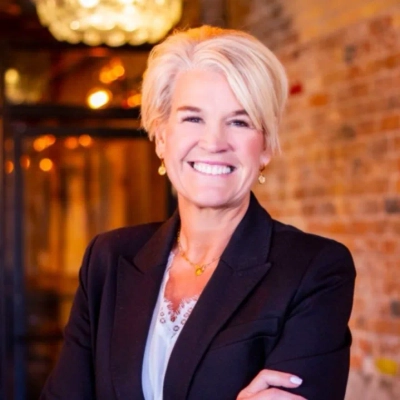 Traci DolphinPresident, Equipment Leases
My non-traditional path was moving laterally between mortgage finance and equipment lending rather than advancing vertically within a single institution. Most credit professionals build their careers deepening expertise in one asset class. I built mine across two, which created a perspective on credit evaluation that neither track produces on its own.
Mortgage finance taught me how to read a borrower's complete financial picture with precision and how documentation quality directly predicts loan performance. Equipment finance taught me how to underwrite the story behind a business, the strategic rationale for a capital investment, and the relationship between asset productivity and loan serviceability. Bringing both frameworks into a single credit practice changed how I evaluate deals in ways that a conventional progression through either discipline alone would not have produced. I also maintained my mortgage broker license alongside my equipment finance career. That parallel practice kept my credit instincts sharp across different asset classes and borrower profiles simultaneously. The plateau I broke through was the one that comes from knowing one thing very well. The path out was deciding to know two things very well instead.
Design Software From Operator Experience
 Michel MyaraCo-founder & Product designer, looch
My finance education was doing my own books every day for 13 years. I ran beverage brand production businesses, lived in QuickBooks the whole time, then spent a few years consulting on accounting automation for other small businesses. No CPA license, no controller-to-CFO ladder.
The non-traditional move was leaving the operator seat entirely. The conventional next step from where I sat was a bigger finance role somewhere. Instead, I co-founded looch and became its product designer, building the accounting software I'd spent 13 years wishing existed. Designing over 1,000 screens will teach you more about what finance work is actually made of than any promotion would have.
What the detour bought me is judgment no title confers: I know which finance tasks deserve a person's time because I personally did the ones that didn't. Every decision I make now starts from two assumptions I earned the hard way: The user doesn't know accounting, and the user doesn't want to learn it.
Apply M&A Insight to Elevate Enterprise Value
 Nicholas PiscaniFounder, MyExec
The most valuable thing I did was take a seat at the M&A table before I was technically "senior enough" to own it. At my PE-backed role, I pushed to get involved in acquisition work alongside the strategic decisions - evaluating targets, working through integrations, sitting in rooms where the cost of a wrong call was measured in millions. That exposure compressed years of career development into months.
The unconventional part was building the company I eventually founded, MyExec, partly around that M&A lens. Most fractional finance firms sell forecasting and reporting. I structured my practice around the question owners actually care about: what is this business worth, and what decisions between now and a sale will protect or destroy that value?
That meant pursuing valuation credentials and NACVA standards on top of the FP&A work, not instead of it. The combination changed the quality of conversations I have with founders. When a $40M executive coaching client couldn't understand why margins were compressing despite growing revenue, the answer wasn't just in the numbers - it was in understanding what that business was actually worth and what was quietly eroding it.
The plateau broke when I stopped optimizing my career for the next title and started building around the problems I genuinely wanted to solve.
Launch DeFi Products Beyond Traditional Finance
 Daniel BrinzanFounder, Nika Finance
I left the finance career track entirely when I started building Nika Finance. No CFO ladder. No progression through banking tiers. Just me and two other people building a non-custodial DeFi application from scratch with no institutional template to follow. That decision broke through every plateau I'd hit in traditional finance roles because it forced me to stop optimizing for the next rung and start optimizing for the thing users actually needed.
The conventional path in finance teaches you to manage up, build decks, and defend forecasts in rooms where the decision-makers are three layers removed from the product. Building a consumer application with a three-person team inverted that completely. I became the decision-maker, the executor, and the person reading user feedback at 11 p.m. on a Saturday. There was no gap between strategy and implementation. We shipped perpetuals routing through Hyperliquid via builder codes, prediction markets routing through Polymarket, and an AI layer that lets users express intent in plain language, all without the bureaucracy that would have added six months and eight people to the build in a traditional org.
The benefit wasn't just speed. It was clarity. When you're responsible for product, fundraising, operations, and architecture simultaneously, you stop thinking in silos. Our $2M angel round taught me more about capital structure than any finance leadership role ever did because I had to defend why we chose conviction capital over venture capital optimized for token exits. Building non-custodial by architecture rather than marketing claim taught me more about risk than any compliance framework. And watching a three-person team outship organizations ten times our size taught me that org design is often the constraint, not talent or capital.
The finance plateau happens when your growth is gated by someone else's timeline. Stepping outside that system meant my growth was gated only by how fast we could learn and ship. That's the difference.
Bring Cross-Border Compliance In-House
 KEITH YUNXI ZHUChief Executive, TKEG Expat INC
TKEG Expat is a corporate-services firm that manages 120 companies across 22 jurisdictions, and my own degree is in international relations. My non-traditional path was to bring the compliance filing in-house, in five countries, instead of routing it to a local referral. In Crist Kolder Associates' 2025 Volatility Report, only 34.2 percent of 661 sitting Fortune 500 and S&P 500 CFOs hold an accounting certification. Therefore, I do not think the accounting route is the conventional one at all.
Moreover, since I took over a suspended division in 2023 and reinstated its services in 2024, we have done corporate income tax, VAT registration and statutory accounts across five jurisdictions, with the filing mechanics codified in-house as eight reusable workflow skills.
For example, one company's first accounting period ran thirteen months. The registry accepted one set of accounts for the whole period, whereas the tax authority split the same thirteen months into two corporation tax periods and set the payment dates independently, so one set of books carries three dated obligations on two clocks.
Moreover, I do not read the "plateau" as a seniority problem. A figure on a set of accounts creates the next dated obligation instead of scoring the year, and our compliance calendar keeps every one of the 109 currently live obligations as a dated, typed row owned by a company, none of them overdue. For a finance leader who feels stuck, I'd recommend taking one filing in-house end to end before hiring the next specialist.
Combine Fintech With Community Education
 Leo TruongFounder & Financial Advisor, Plan with Leo
Having spent over 15 years in finance leading an agency serving over 2,000 clients, my leadership plateau broke when I stopped following traditional corporate ladders. Instead, I pivoted into combining grassroots community education for first-generation immigrants with fintech development.
Stepping into technology led to creating Plan with Leo, an AI-driven budgeting tool that integrates real-time income, expenses, and future events. Building this platform forced me to think beyond standard financial advising and transform how we teach tax-advantaged wealth protection at scale.
This non-traditional leap reshaped my career, allowing me to mentor more than 100 agents nationwide on tech-enabled strategies for underserved communities. True leadership growth happens when you stop managing conventional paths and start solving systemic, real-world accessibility challenges.
Serve Self-Employed Borrowers Through Non-QM Loans
 Dale GremillionSenior Loan Officer & Producing Branch Manager, Capital Home Mortgage California
I spent 25 years in conventional lending before shifting focus to non-QM options like bank statement and profit-and-loss mortgages for self-employed borrowers in California. That move came after hitting limits with strict W-2 documentation requirements that blocked many otherwise solid clients.
Stepping into these alternate programs let me build a direct pipeline to private investors and faster closings that standard branch roles never offered. One case involved helping a contractor qualify using 12 months of bank deposits when tax returns alone would have disqualified him.
This path expanded my reach into renovation and manufactured-home chattel loans that most leadership tracks ignored. It grew my book by solving problems others walked away from, sharpening my ability to match funding sources to unique property and income situations.