

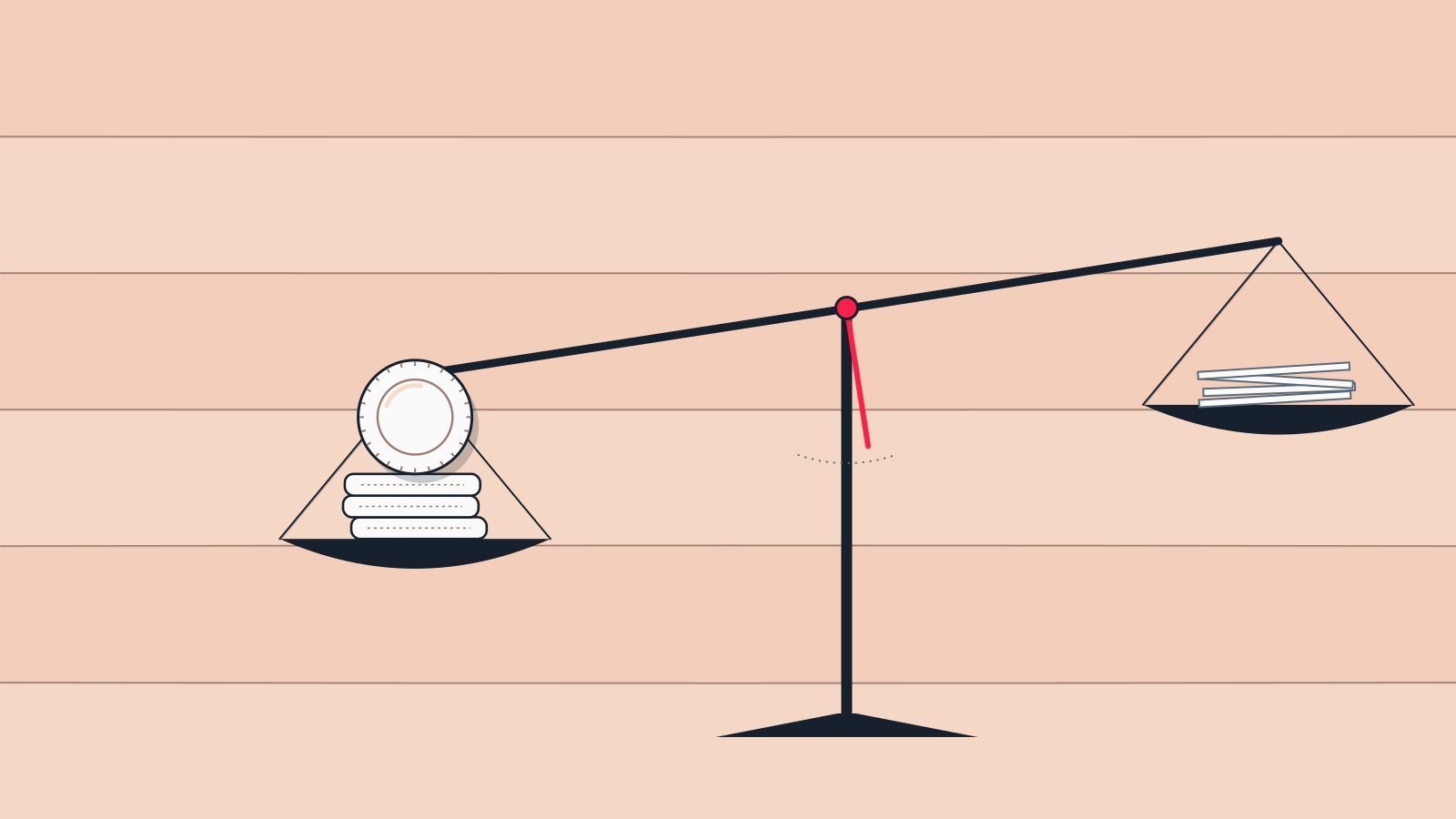
TLDR: When one client makes up forty percent of your revenue, you do not have a client, you have a silent partner who can fire you. Real financial management for a service business means stress-testing concentration risk before it tests you, and protecting cash flow when your money lives in three different currencies. I learned both the hard way, in the same quarter.
The email arrived on a Tuesday morning. Our largest client, a real estate developer who accounted for thirty-eight percent of our monthly revenue, was "restructuring their marketing" and pausing all external work for ninety days. By the time I finished reading it twice, I had done the math that every founder dreads. Losing them meant losing more than a third of our cash flow overnight, and our fixed costs did not pause just because their budget did.
We survived it, barely, and only because of a few decisions I had made almost by accident months earlier. But the fear of that morning rewired how I think about money. Revenue is vanity. Concentration is the thing that actually kills you, and almost nobody measures it until it is too late.
The Problem With Celebrating Your Biggest Client
A big client feels like a win. The logo you put on the pitch deck, the case study you tell prospects about. The bigger they get, the better the relationship looks.
From the inside, every dollar that client adds past a certain point makes you more fragile. When one account crosses roughly twenty percent of your revenue, your business stops being yours in a quiet way. Their new CMO who "wants to bring things in-house" becomes the email that ruins your Tuesday.
The Corporate Finance Institute describes customer concentration risk as one of the first things a buyer or lender scrutinizes when valuing a business, because it tells them how much of your future is outside your control. A business with one client at forty percent is worth its revenue heavily discounted for the chance it walks out the door.
I knew all of this in theory, and I had still let one client drift to thirty-eight percent because the money was easy. Easy money is the most expensive kind.

How I Stress-Test Client Concentration Risk Now
After that Tuesday, I built a simple discipline I run every month, and it takes about thirty minutes. I list every client by trailing-three-month revenue, calculate each as a percentage of the total, and ask one question of the top three. What happens to next month's cash flow if this client disappears today? Not "will they leave," which I cannot predict. The question is what their loss would do, regardless of likelihood, because the job of financial management is to survive the event you did not see coming.
- Any client above 25 percent triggers a written plan. Either we diversify to shrink their share, or we hold a cash reserve sized to absorb their loss.
- The top three combined above 60 percent is a red line. When three clients can take the majority of your revenue in one bad quarter, you run on borrowed luck.
- I model a "two worst at once" scenario. The realistic disaster is your two biggest clients both tightening budgets in the same downturn, because downturns hit everyone's clients at once.
This is the same logic a Harvard Business Review piece made during the 2020 disruptions: resilience is built before the shock, not during it.
The Reserve That Saved Us
Here is the decision that saved my business, and I am almost embarrassed to admit it was half luck. Six months before that email, I had started keeping a cash reserve equal to three months of fixed costs. When the developer paused, that reserve was the difference between calm decisions and panic ones. I did not have to let anyone go or chase bad-fit clients at desperate prices. I had ninety days to replace the revenue properly, and we did, with two mid-sized clients who, combined, were less concentrated than the one we lost.
The number I now hold for any service business is three to six months of fixed costs in reserve, weighted toward six the more concentrated your revenue is. The buffer should match the size of your single largest risk.
The Currency Problem Nobody Warned Me About
Concentration is one threat to cash flow. Currency is the other, and it ambushed me because I never saw it as a financial risk at all.
My business earns in three currencies: UAE retainers in dirhams, US work in dollars, domestic work in local currency. For years I treated this as an accounting footnote. It is a real exposure that erodes your margin between the day you invoice and the day you get paid. A UAE retainer of $15,000 (AED 55,000) invoiced one month and paid the next can lose real value if the conversion moves against you, and across a year those slippages add up. Holding money in one currency while owing it in another is a bet, whether or not you meant to place it.
What I do now is straightforward. I match currencies where I can, paying costs in the currency I earn them in. For the rest, I hold operating reserves in the currencies of my largest obligations, so a payroll due in one currency is funded by reserves already in it. The Bank for International Settlements publishes the exchange data that shows how much these movements matter at scale, and a small business just feels them later.
The Financial Management Rules I Give Other Service Founders
Two numbers should sit on every founder's desk, updated monthly. The percentage of revenue from your single largest client, and the number of months your reserve would cover fixed costs if that client vanished. If the first is high and the second is low, you do not have a healthy business. You have a profitable one that is one email away from a crisis.
Growth hides concentration risk. A rising tide of new revenue makes a dangerous client mix look fine, right up until the tide goes out and you discover your biggest client was holding up the whole structure. The time to fix concentration is when you are flush.
I still have large clients. I no longer let any past the line where their decision becomes my emergency. The money you keep, spread across enough clients and currencies to survive a shock, is worth more than the money you almost lost.