
Trade policies rarely feel abstract when you look at them from a CEO’s perspective.
While the tariff wars may be planned in the U.S, their impacts are often quite visible on the balance sheets and boardrooms across the world. Forecasts become less reliable, input costs change & margins decrease. Things that may have felt under control in the first quarter suddenly seem to be spiraling out of control by the third.
Financial leaders face different challenges in such situations. They don’t have to get their trade policy predictions right a 100%. What they actually need to do is to build organizations that are resilient enough to absorb these changes.
Having helped countless businesses and families get through economic shifts like recession, regulatory changes & rate spikes, in my forty years of career, I have learned that the real threat is not the uncertainty, but overreaction.
Tariffs do cause some friction, but the damage is often a result of panic.
Tariffs Are a Cost Shock — But Also a Strategy Test
Basically, the real problem that tariffs cause is the cost shock. The price of imported goods increases, organizations feel the need to restructure their contracts, suppliers renegotiate & working capital assumptions change.
This creates three immediate problems for CFO’s:
- Gross margin compression
- Inventory valuation volatility
- Pricing strategy tension
Tariffs are also a test of how well an organization’s financial structures are built. Companies with a limited supplier base, optimistic assumptions, and thin liquidity feel the impact of new tariff policies disproportionately. And those who have spent time diversifying their sources, building better liquidity & creating capital allocation discipline tend to withstand the blow with less drama.
The Supply Chain Is Now a Financial Instrument
Supply chains used to be considered the operational part of any business. Today, they are more of a financial tool.
CFO’s are now required to think beyond procurement only. Creating multiple supplier streams is no longer just about cutting costs and finding the cheapest one, but it is now related to the changing geopolitical situations around the world, too. Being heavily dependent on a single region can expose an organization to unwanted risks, which can easily eat into its profit margins in the future.
Finding the cheapest products is not the only goal. The real answer that the CFO’s need to search for is where their supply chain performs best under pressure.
This means settling for trades that may feel uncomfortable immediately, but provide security in the long run. Predictability has its own financial value. It helps bring clarity in forecasts, protect investor confidence & provide flexibility.
Pricing Power
The impacts of tariffs are not experienced in the same way by all companies. Those that have stronger products, a stronger brand & a customer base that is loyal can play around with their prices with more freedom than others without facing resistance. Others may not be so lucky.
While being optimistic is often a good thing, it should not be allowed into pricing elasticity assessments by the CFOs. It is tempting to assume that there will be no backlash from the customers on a price increase, especially when the company struggles financially. This happens in some sectors, but in others it may not be as true and can cause a lower demand of product.
This is where scenario modeling becomes more important. Financial leaders should not stick to a single prediction and should model multiple scenarios with varying pass-through rates. Each scenario should be tested under different variable conditions, and liquidity projections should be run against each. Evaluate cash conversion cycle against each outcome.
Working Capital Discipline Becomes Strategic
Many firms also make reactive inventory decisions when under pressure from the tariffs. Some go all in with purchasing, trying to save them from further price hikes. And others often reduce orders to preserve cash.
In reality, both approaches are highly susceptible to backfire if done without in-depth analysis.
Being low on inventory can result in loss of sales if the supply chain gets worse, and having too much of it can increase the cost required to store it, which can tie up a considerable amount of capital.
CFOs need to rethink working capital as an integrated strategy. Their focus should be more on payable management, creating inventory models that provide greater flexibility & shorter receivable cycles.
Debt Structures Under Scrutiny
Organizations and individuals alike need to pay special attention to debt structures, especially in an economic climate like that of today, where interest rate fluctuations coincide with new tariff policies. CFO’s should make sure they review covenant headroom, refinancing windows, debt maturity ladders & interest rate sensitivity.
The goal should always be to leverage a strategic advantage, not something that restricts growth. Throughout my career, I’ve watched many businesses collapse because they clung to rigid capital structures that left them with no flexibility to adapt. I often tell my clients that flexibility is the oxygen that keeps a company financially alive.
Communication Is Capital
Narrative is as powerful as numbers are, and it is absolutely true that markets react to narratives.
When tariffs become the talk of the town, investors, lenders, customers & employees want reassurances. Staying silent in such tense situations can lead them to make assumptions that may not be true. And overconfidence can damage credibility.
Good CFOs ensure they remain transparent in situations like these. They clearly communicate what steps are being taken to mitigate the impacts of new tariffs, where exposure exists, what their liquidity situation is & what their plans are if things do not go as planned.
Candor builds trust, and trust leads to stabilized valuations.
Avoiding the Extremes
Complacency and Overcorrection are the two most dangerous reactions to tariff volatility. The latter means restructuring aggressively based on immediate policy changes, and the former means assuming that the disruption is only temporary that require minimal changes. Practically, resorting to both of these extremes can be catastrophic.
Tariffs are political instruments that change in intensity with a change in diplomatic policies. That’s why CFOs must move with agility and restraint.
Incremental changes like source diversification, changing prices moderately & cost reviews are often better than radical changes driven by fear.
Consistency beats chaos.
The Broader Economic Context
Tariffs often impacts economy with other variables that come into play at the same time. These variables may include labor shortages, high inflation, currency devaluation & changing customer demands.
That is why financial leaders cannot ignore the cumulative impact of these factors and focus only on a single variable. It is true that if one takes a look at tariff increases, they may seem easily manageable. But the fact of the matter is that when it compounds with higher interest rates and wage inflation, it becomes a very big problem.
Holistic financial modeling is a cornerstone of successful businesses today. I have seen organizations outperform their competitors because they make sure they integrate macroeconomic awareness into their routines, which allows them to maintain a proactive approach.
The Human Factor
It’s easy to reduce tariff conversations to spreadsheets. But behind every financial decision are people, employees worried about job security, customers concerned about price increases & shareholders assessing risk.
Financial leadership during trade volatility requires steadiness. CFOs set the tone. If leadership appears reactive, teams become reactive. If leadership models discipline, teams respond in kind.
A Final Thought
Fundamentals of finance are the only things that remain unchanged. Political cycles keep influencing economic policies, trade relationships are never set in stone, and they also change & tariff policies keep evolving.
With over four decades of experience in finance, I have seen many ups and downs. The thing I have found common in firms that endure is that they rarely resort to aggression. Their success is always rooted in discipline.
Tariffs may test margins. They may test forecasts. They may test patience. But they also reveal something more important: the strength of a company’s financial foundation.
And in uncertain times, the foundation is everything.
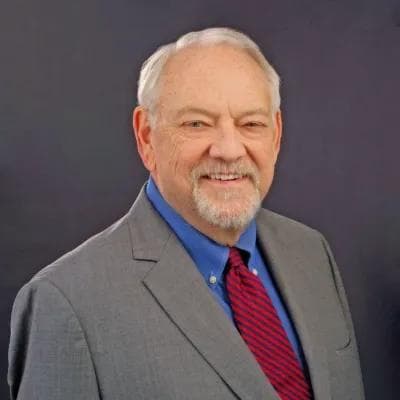
About Harold Wenger Jr.
Harold Wenger, Jr. is a Partner and Wealth Manager at Kingsview Partners with over 40 years of experience in financial services. Harold offers not only investment management but takes a holistic approach to financial planning, along with guidance on insurance, liability reduction & long-term planning. By working closely with clients, he helps them navigate their financial goals & ensures their plans remain adaptable through behavioral finance studies & risk assessments. Harold's comprehensive strategy is designed to create sustainable financial futures by addressing every aspect of his clients’ needs.
Investment advisory services offered through Kingsview Wealth Management, LLC ("KWM"), an SEC Registered Investment Adviser. Insurance products and services are offered and sold through Kingsview Trust and Insurance Services ("KTI"), by individually licensed and appointed insurance agents. KWM and KTI are subsidiaries of Kingsview Partners. KWM is an investment adviser registered with the Securities and Exchange Commission (“SEC”). Information presented is for educational purposes only and does not intend to make an offer or solicitation for the sale or purchase of any specific securities, investments, or investment strategies. Investments involve risk and unless otherwise stated, are not guaranteed.